

The God Who Hung the Stars... Sees You
Last summer, I spent several days hiking in the San Juan Mountains of Colorado with three of my brothers. Our goal was ambitious: summit one of Colorado's famous "14ers," mountains that rise more than 14,000 feet above sea level.
We made it to about 13,000 feet before deep snow blocked the trail. So we sat down, caught our breath, and took in the view.
As I looked across the mountains, two thoughts crossed my mind. The first wasn't especially spiritual: I wonder how big of a boulder the four of us could push off this mountain? (Thankfully, we resisted the temptation in case another hiker happened to be below.)
THE SECOND THOUGHT STAYED WITH ME MUCH LONGER
"O LORD, our Lord, how excellent is thy name in all the earth!" (Psalm 8:1)
Standing there surrounded by towering peaks, I felt what David must have felt when he wrote Psalm 8. Creation has a way of reminding us that God is far bigger than we usually imagine.
When We Look Up
Our culture trains us to look inward.
How do I feel?
What do I want?
What will make me happy?
David begins somewhere entirely different. He looks up.
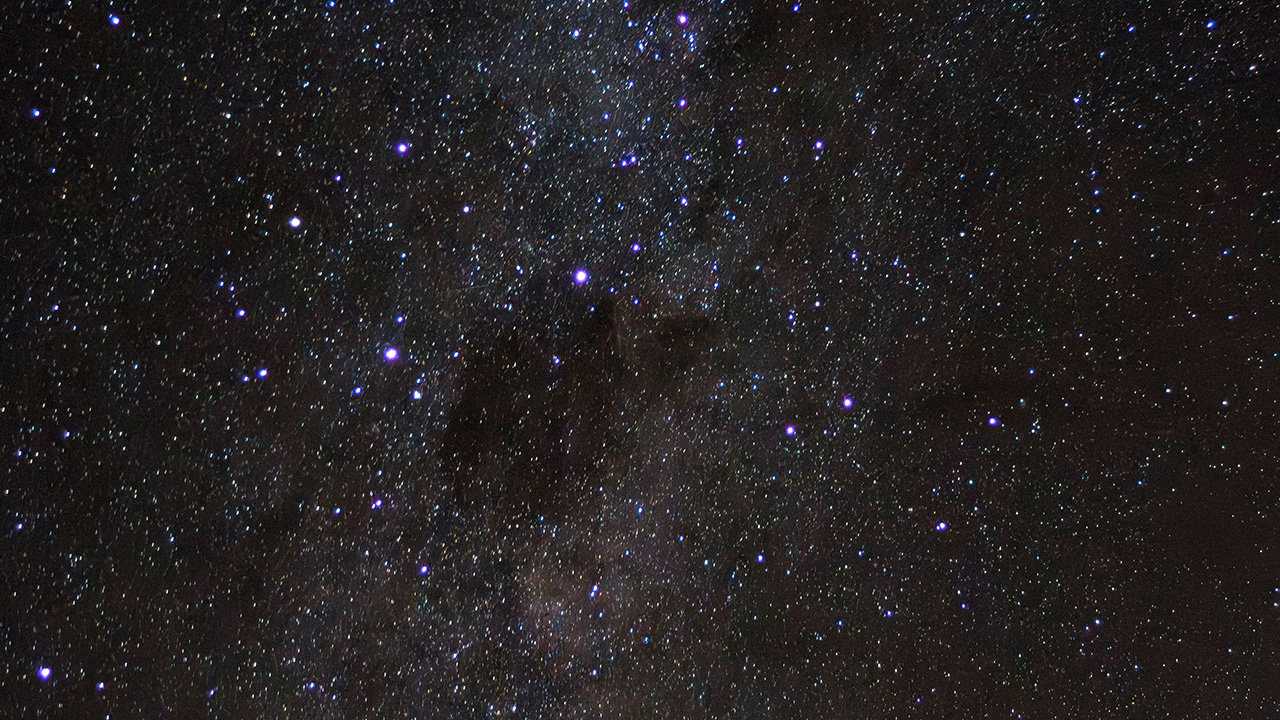
"The heavens," he says, are "the work of [God's] fingers."
Think about that description for a moment.
Not the work of God's mighty arms.
Not the work of His exhausting labor.
The work of His fingers.
What takes scientists lifetimes to study, God fashioned effortlessly. Galaxies, stars, planets, oceans, mountains—creation isn't evidence that God barely got the job done. It's evidence that His power has no equal.
Every sunrise whispers His glory. Every sunset shouts it.
The heavens don't simply display beauty; they proclaim the greatness of their Creator.
Maybe one of the most spiritual things you could do this week is to step outside after dark, put your phone away, and simply look up.
Creation is still preaching.
The question is whether we're listening.
Then Comes the Bigger Question
Ironically, seeing God's greatness doesn't inflate our view of ourselves—it shrinks it.
David continues:
"What is man, that thou art mindful of him?" (Psalm 8:4)
That's an honest question.
When you realize how vast the universe is, it's natural to wonder whether you matter at all.
Our culture offers conflicting answers. On one hand, we're told humanity is simply the product of random chance—an accident in an indifferent universe. On the other hand, we're told to find our worth by believing in ourselves.
Those two ideas don't fit together.
If we're merely accidents, why should human life possess any lasting dignity?
Psalm 8 offers a far better answer.
You matter because you were made by God.
David reminds us that God crowned humanity with "glory and honor." From the opening pages of Genesis, we learn that every person bears the image of God. That means every human life has inherent worth—not because of achievement, wealth, intelligence, popularity, or ability, but because our Creator placed His image upon us.
Every unborn child.
Every elderly neighbor.
Every struggling addict.
Every successful executive.
Every person across every race, nation, and background.
Every single one bears God's image.
The God who made galaxies also made you.
The God Who Didn't Stay Distant
But Psalm 8 goes even further.
David asks why God is mindful of us. The answer isn't simply that He created us.
It's that He came for us.
Centuries after David wrote these words, God visited His people in the person of Jesus Christ.
The Creator entered His own creation.
The One who hung the stars became a baby.
The King of Heaven chose a manger.
The One whose glory fills the heavens embraced weakness, humility, and ultimately the cross.
That may seem like an unexpected way to defeat evil, but throughout Scripture, God delights in displaying His power through what the world considers weak. He uses shepherds instead of kings, fishermen instead of scholars, and ultimately a crucified Savior instead of a conquering military hero.
What looked like defeat became history's greatest victory.
At the cross, Jesus conquered our greatest enemies—sin, death, and Satan—not through overwhelming force but through sacrificial love.
That's why Psalm 8 doesn't merely inspire awe.
It points us to grace.
The Only Reasonable Response
David begins and ends his psalm with the same words:
"O LORD, our Lord, how excellent is thy name in all the earth!"
That's where every glimpse of God's greatness should lead us.
Not merely to more information.
Not simply to better theology.
To worship.
The next time you find yourself under a sky full of stars, standing beside the ocean, or watching the sun disappear beneath the horizon, don't rush past the moment.
Pause.
Look up.
Remember that the God who created all of it with His fingers also knows your name, thinks about you, and proved His love for you through Jesus Christ.
That's a God worthy of our praise.


Copyright 2026 Harvest Baptist Church
All Rights Reserved.